
By Kimberly Carroll Steward
Attending the Circularity Forum and RCon 2026 was a valuable opportunity to connect with professionals across the recycling and materials management industry, exchange ideas, and explore new approaches to reducing waste and strengthening recycling systems. With the Circularity Forum taking place the day before RCon, the two events offered an opportunity to explore both the broader vision of a circular economy and the practical strategies needed to improve recycling and resource recovery.
Making Circularity Local and Accessible
The Circularity Forum opened with a keynote from Brooke Butler, senior managing producer at Nine PBS, who shared insights from her series What Do I Do with This?. For three years, the series has explored a deceptively simple question: What happens to the things we no longer need?
Beginning with the story of Christmas trees that St. Louis County Parks sinks in Spanish Lake to create fish habitat, Butler demonstrated that materials often have a second life when the right solutions are available. As she explained, “Everything has a story after we’re done using it.”
One of my biggest takeaways from her presentation was the difference between how households and the waste management industry view unwanted items. A couch sitting in a garage may not seem like a waste management issue to a family, but rather a source of stress, emotion, and clutter. Similarly, people may hold on to old electronics and dead batteries because they want to dispose of them properly but do not know where to take them. Items abandoned in alleys signal a lack of accessible information and resources rather than a lack of concern or care.
Butler challenged the expectation that consumers should have to navigate complicated waste management systems on their own, asking, “Why are consumers expected to become the experts in a system they didn’t create?”
This message resonated with the work of the Nebraska Recycling Council (NRC). Providing information about why recycling and waste reduction matter is important, but that information must be paired with practical guidance about where materials can go and what options are available locally. Making the right choice easier for residents and businesses is essential to building effective, accessible recycling and reuse systems.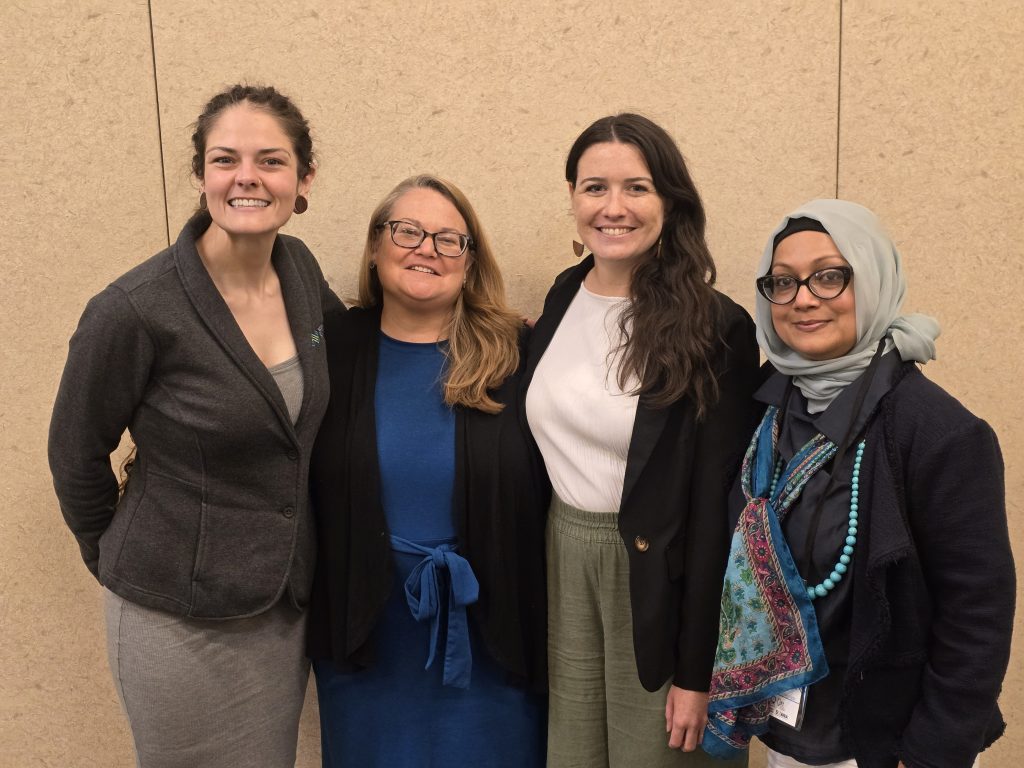
The Circularity Forum continued this theme through presentations from organizations, schools, universities, local governments, and community leaders working to put circular-economy principles into practice. Speakers shared examples of creative reuse programs, campus-wide waste reduction initiatives, student-led recycling competitions, and community partnerships addressing illegal dumping and improving recycling access. Other presentations explored sports equipment redistribution, university reuse centers, regional circularity hubs, and opportunities to recover materials from industries such as the performing arts.
Education and institutional leadership were also major themes. Webster University student Anjali Devi reflected on differences in waste management infrastructure between her home community in India and her experiences in Missouri, emphasizing the importance of asking not only where waste goes, but where its value can go next. Other speakers reinforced that individuals cannot be expected to make sustainable choices when the necessary systems and infrastructure are missing. From staffed collection stations to campus-wide reuse and composting programs, their examples demonstrated how institutions can make doing the right thing the easy thing.
Later sessions explored community-led solutions, local government initiatives, and extended producer responsibility (EPR), including the role of producers in financing and improving packaging recovery systems. Collectively, the presentations illustrated that building a circular economy requires action at multiple levels, from individual purchasing decisions to institutional practices, local infrastructure, and statewide policy.
Connecting with Industry Leaders at RCon
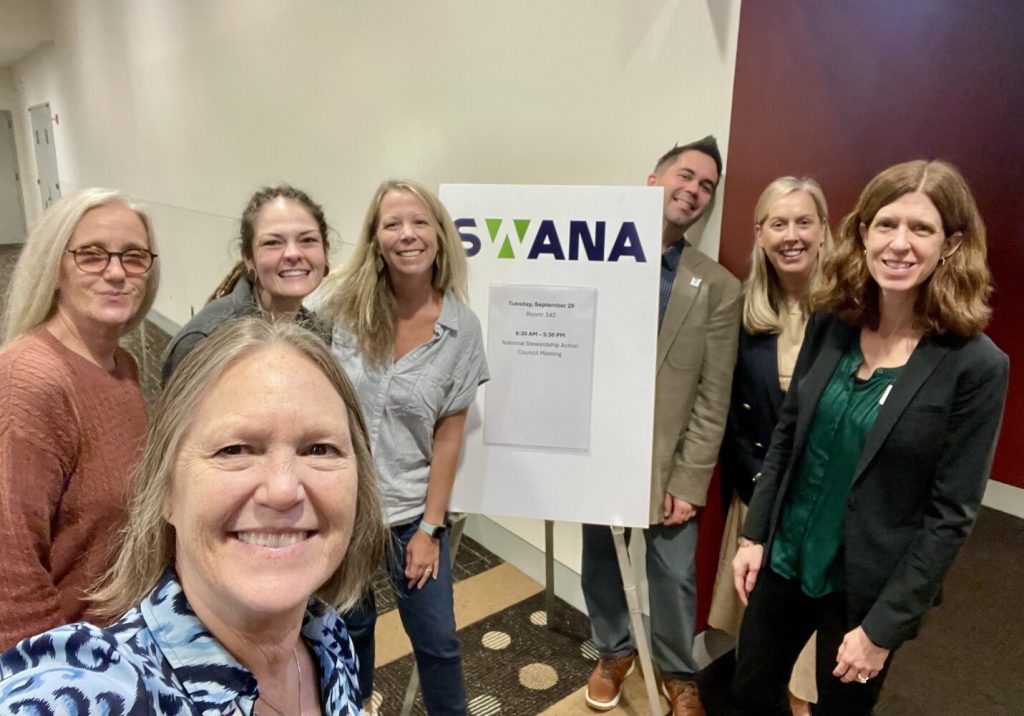
For me, RCon 2026 began with a meeting with Carolyn Muller, SWANA’s Acting CEO, along with other members of SWANA’s leadership team and National Stewardship Action Foundation’s Board of Directors. The meeting provided a valuable opportunity to connect, discuss shared priorities, and explore opportunities for collaboration between organizations working to advance sustainable materials management and resource recovery. These conversations set a collaborative tone for the events that followed and reinforced the importance of building strong relationships across the industry.
The RCon program covered a wide range of topics shaping the future of waste and resource management. Sessions explored worker safety, emerging technologies, recycling system improvements, packaging design, circularity, recovery of hard-to-recycle materials, and workforce development. Other topics included landfill management, landfill gas, PFAS treatment, collection and transfer operations, and innovations in resource recovery.
The breadth of these topics highlighted the complexity of managing materials effectively. Improving recycling rates is only one part of the equation; successful materials management also depends on safe and efficient operations, appropriate infrastructure, viable end markets, responsible product design, and collaboration among the many organizations involved in moving materials through the system.
One of the most valuable aspects of attending a conference like RCon is the opportunity to learn directly from professionals who are navigating these challenges every day. Hearing about new approaches, lessons learned, and solutions being implemented in other communities provides ideas that can be adapted to Nebraska’s unique needs.
Seeing Materials Management in Action
The facility tours were another personal highlight of the conference. I had the opportunity to visit Recycle City, where we explored materials recovery, transfer station, and composting operations, as well as Champ Landfill, where we learned about landfill operations and PFAS treatment.
I always appreciate the opportunity to get out and see these systems firsthand. Facility tours provide a practical perspective on the infrastructure, equipment, and operational considerations involved in managing the materials generated by our communities every day. They also offer a better understanding of what happens after materials leave our homes and businesses, whether they are sorted for recycling, processed through composting, or ultimately sent to a landfill.
These visits reinforced the importance of viewing waste management as a connected system. Landfills and recycling facilities are essential components of that system, but reducing our reliance on disposal requires us to think further upstream. Waste prevention, reuse, contamination reduction, effective collection systems, and strong markets for recovered materials all play a role in ensuring resources are used to their fullest potential.
For me, these tours are particularly valuable because they connect the conversations about policy, education, and program development with the realities of day-to-day operations. Understanding those realities helps us better support Nebraska communities and identify opportunities to improve resource recovery across the state.
Bringing Ideas Back to Nebraska
Across the Circularity Forum and RCon 2026, a consistent theme emerged: addressing today’s waste management challenges requires collaboration, innovation, and a broader view of materials as resources rather than simply waste.
The Circularity Forum emphasized the importance of making solutions accessible and ensuring people have the information and infrastructure needed to act. RCon expanded that conversation through technical sessions, industry connections, and opportunities to see materials management systems in operation. Together, the events demonstrated how education, infrastructure, policy, and partnerships must work together to advance meaningful progress.
For the Nebraska Recycling Council, these conversations offered valuable perspectives to bring back to Nebraska as we continue supporting communities, strengthening recycling programs, and advancing sustainable materials management. They also reinforced the importance of collaboration across the recycling and solid waste industries. No single organization can solve these challenges alone, but by sharing knowledge, building partnerships, and learning from one another, we can identify practical solutions that work for Nebraska.
I am always grateful for the opportunity to participate in these events, connect with colleagues across the industry, and bring new ideas back to our work. Continued collaboration will be essential as we work toward a future where fewer valuable materials are wasted and more resources are kept in use for the benefit of our communities and environment.


